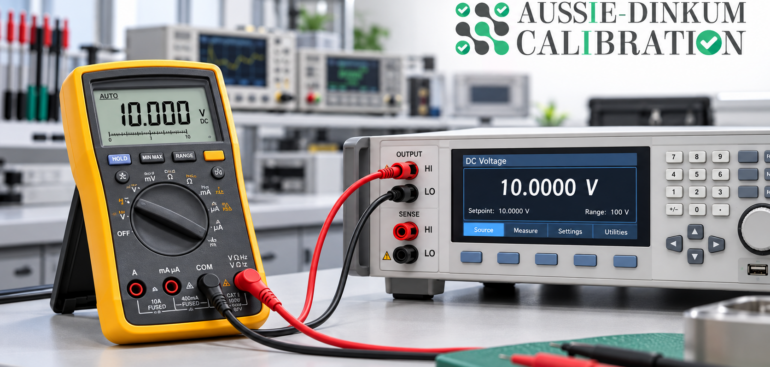
Multimeter calibration helps Australian businesses maintain confidence in the electrical measurements used for maintenance, fault diagnosis, equipment testing, and quality control. Electricians, technicians, engineers, and laboratory staff rely on multimeters to measure quantities such as voltage, current, and resistance. However, a multimeter can continue displaying readings even when its measurement accuracy [...]
Equipment can appear to work normally while producing inaccurate measurements. It can also provide accurate readings while developing mechanical faults that could interrupt operations. These are different problems, and they require different controls. Preventive maintenance helps keep equipment in suitable operating condition. Calibration establishes how its measurements compare with recognised references. [...]
Accurate measurements are important for Australian businesses that depend on testing instruments, production equipment and quality-control processes. Whether an organisation uses pressure gauges, thermometers, multimeters or weighing scales, it needs confidence that its equipment is suitable for the intended task. Calibration and verification both support reliable measurements, but they serve different [...]
Accurate measurements are important for businesses that rely on instruments to monitor processes, inspect products and make technical decisions. Pressure gauges, thermometers, multimeters, weighing scales and dimensional instruments all need to perform within the requirements of their intended applications. Over time, instrument performance can change because of wear, environmental exposure, damage [...]
Accurate measurements are essential for food safety, product quality and consistent production. Food and beverage businesses across Australia use measuring instruments to monitor cooking temperatures, refrigerated storage, ingredient quantities and processing conditions. When these instruments provide inaccurate readings, businesses may make decisions based on unreliable information. A thermometer may indicate that [...]
Accurate measurements are essential for businesses that depend on instruments to maintain product quality, monitor processes and make technical decisions. Across Australia, manufacturing facilities, laboratories, engineering companies and healthcare organisations use measurement equipment in their everyday operations. However, no measurement is perfectly exact. Even when equipment is calibrated using suitable reference [...]
Temperature and humidity affect how products are manufactured, stored, tested and transported. Australian businesses use thermometers, temperature probes, data loggers and humidity sensors to monitor these conditions and make decisions based on their readings. Over time, an instrument’s readings can drift. If the error goes unnoticed, a business may believe its [...]
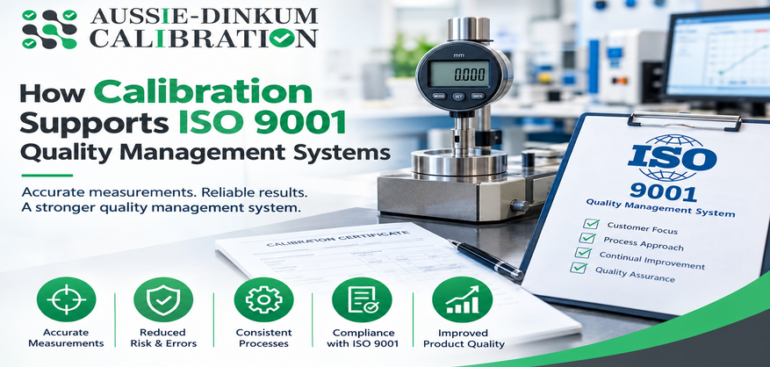
Accurate measurements help businesses check whether their products, services, and processes meet requirements. If a measuring instrument gives unreliable results, a business may accept work that does not meet specifications or reject work that does. Calibration helps organisations maintain confidence in the equipment they use for inspection, testing, and quality control. [...]
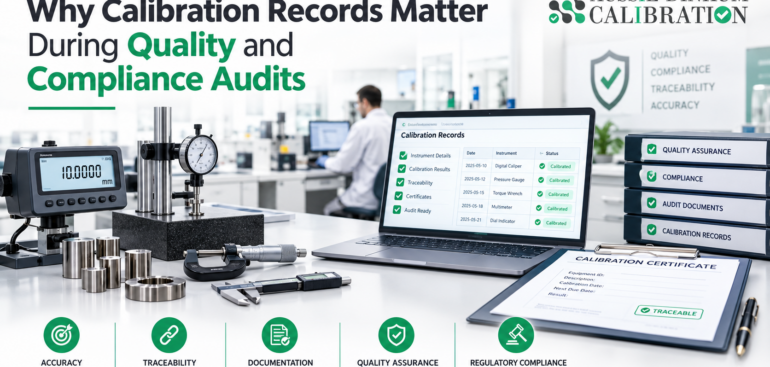
A calibration certificate shows what happened during one calibration. A complete calibration record tells a wider story: which instrument was checked, whether it was suitable for its intended use, when it was used, and what the business did if a problem was found. During a quality or compliance audit, that history [...]
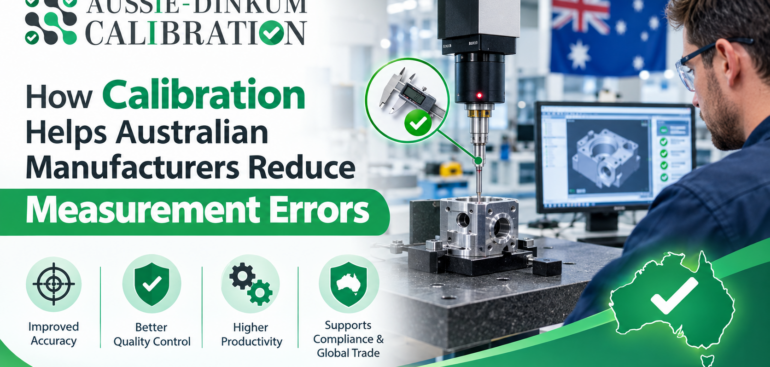
Accurate measurement is essential in Australian manufacturing. From checking component dimensions and electrical values to monitoring pressure, temperature, flow, and weight, manufacturers rely on measuring instruments throughout the production process. Over time, instruments can become less accurate because of regular use, wear, vibration, environmental conditions, ageing components, accidental damage, or incorrect [...]