
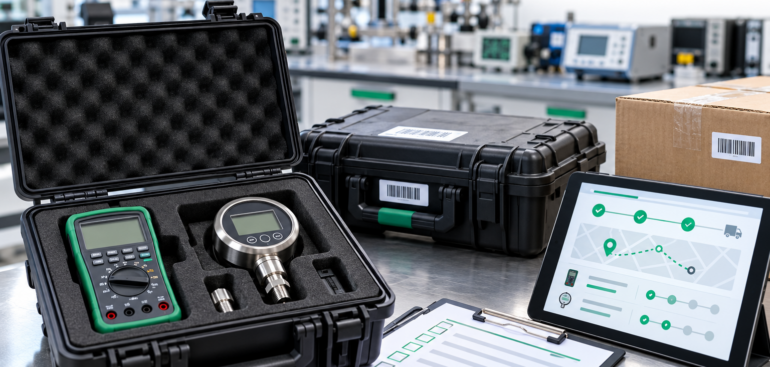
Calibration services in Melbourne help businesses assess the measurement performance of instruments used in manufacturing, maintenance, testing and quality control. When equipment leaves the workplace for an external laboratory, businesses also need a reliable way to track its location, service progress and return.
A courier delivery confirmation shows that a parcel has arrived, but it does not confirm that the laboratory has checked the contents, completed the agreed calibration or issued the certificate. Each stage needs a clear record.
A documented tracking process helps businesses manage equipment downtime, protect accessories and ensure instruments are reviewed before returning to service.
Why Is External Calibration Tracking Important?
Sending equipment to an external laboratory temporarily removes it from the business’s direct control. During this period, several people may handle the instrument, including technicians, dispatch staff, couriers and laboratory personnel.
Without connected records, businesses may struggle to establish where an instrument is, what work was authorised or when it will be available again.
Common Challenges Include:
- Equipment dispatched without a recorded serial number.
• Accessories missing from the shipment record.
• Delivery confirmed without laboratory receipt acknowledgement.
• Calibration delayed while the laboratory waits for instructions.
• Additional repair work awaiting approval.
• Certificates filed against the wrong equipment record.
• Returned instruments released before results are reviewed.
• Replacement equipment unavailable during extended downtime.
A central register and an identified coordinator help keep these stages visible.
1. Create a Calibration Dispatch Register
Use a controlled register to record every instrument sent outside the business. This may be a shared spreadsheet, an asset management system or a maintenance management platform.
The register should link each shipment to the individual equipment records. A consignment containing five instruments needs five identifiable equipment entries, even if they share one courier tracking number.
Details to Record:
- Equipment description, manufacturer and model.
• Manufacturer’s serial number.
• Internal asset number.
• Laboratory name and contact details.
• Calibration booking or job reference.
• Purchase order number, where applicable.
• Dispatch date and courier tracking number.
• Expected completion and return dates.
• Current service status.
• Employee responsible for follow-up.
• Certificate reference and return-to-service decision.
Use the same asset number throughout booking, dispatch, certificate review and equipment release.
2. Confirm the Calibration Scope Before Dispatch
Equipment tracking works best when the requested service is clearly defined before the instrument leaves your premises.
A booking described only as “calibrate multimeter” may leave important questions unanswered. The laboratory needs to understand the functions, ranges and test points required for the instrument’s intended use.
Confirm With the Laboratory:
- Which measurement functions require calibration.
• Which ranges and test points are needed.
• Any required probes, sensors or accessories.
• Applicable acceptance limits.
• Whether a statement of conformity is required.
• Whether adjustment is authorised.
• Whether as-found results are required before adjustment.
• Whether repairs need separate approval.
• Expected turnaround time and certificate delivery arrangements.
Where accredited calibration is required, verify that the relevant work is covered by the laboratory’s accreditation scope.
Record the agreed scope against the booking reference so that staff can resolve questions without relying on verbal instructions.
3. Record Equipment Condition and Accessories
Inspect the instrument before packing it. Record visible damage, missing parts and any reported performance problems.
Photographs can help document the condition of the instrument, its identification label and the contents of its case. They support the written record but should not replace an itemised accessory list.
Pre-Dispatch Checklist:
- Confirm the asset number and serial number.
• Record visible damage or existing faults.
• Photograph the instrument and packed contents where useful.
• List leads, probes, adaptors and power supplies.
• Identify detachable sensors separately where necessary.
• Record protective cases and other supplied items.
• Follow the laboratory’s preparation instructions.
• Include relevant operating information or fault descriptions.
Check whether accessories need calibration with the instrument or are included only to support its operation.
4. Pack Equipment and Record Courier Details
Suitable packaging helps protect instruments during transport. Follow the manufacturer’s handling requirements and the laboratory’s shipping instructions.
Use protective packaging appropriate to the equipment’s weight, fragility and accessories. A carrying case may still require an outer shipping carton and cushioning.
Transport Records Should Include:
- Courier name and consignment number.
• Collection date.
• Number of packages.
• Destination address and laboratory contact.
• Shipment contents linked to the equipment register.
• Any relevant handling instructions.
• Delivery confirmation.
For equipment containing batteries or other items subject to transport conditions, confirm the shipping arrangements with the courier before dispatch.
Keep a copy of the packing list with your records and include another copy in the shipment.
5. Confirm Laboratory Receipt
Courier tracking and laboratory receipt are separate checkpoints.
After delivery, obtain confirmation that the laboratory has received and identified the equipment. Ask it to report missing accessories, transport damage or differences between the shipment and booking.
Receipt Confirmation Should Establish:
- Which instruments were received.
• Whether serial numbers match the booking.
• Whether listed accessories arrived.
• Whether any visible damage was identified.
• The laboratory’s job reference.
• Whether further instructions are needed.
• The expected completion date.
If the shipment contains several instruments, confirm receipt of each item rather than recording the entire batch as received without checking.
6. Track Progress With Clear Status Labels
A useful tracking system distinguishes between equipment location and service progress.
An instrument may be at the laboratory but waiting for approval rather than undergoing calibration. A simple “sent for calibration” label does not explain the delay.
Suggested Status Labels:
- Booked for calibration.
• Dispatched to laboratory.
• Delivered, receipt confirmation pending.
• Received by laboratory.
• Awaiting technical clarification.
• Awaiting repair or adjustment approval.
• Calibration in progress.
• Calibration completed, documentation pending.
• Dispatched for return.
• Returned, review pending.
• Released for use.
• Withdrawn from service.
Record the date of each update and the next action required. This makes stalled jobs easier to identify.
7. Manage Delays and Additional Work
Turnaround time can change if equipment needs repair, specialist testing or clarification of the requested scope.
Assign one employee to coordinate approvals and communicate with the laboratory. This helps prevent conflicting instructions and unanswered requests.
When a Delay Occurs:
- Record the reason for the delay.
• Confirm what decision or information is required.
• Identify who can approve additional costs.
• Obtain a revised completion estimate.
• Update affected equipment users.
• Review replacement equipment availability.
• Record the approval and any revised service scope.
Where as-found results are needed to assess the instrument’s previous performance, agree on their collection before authorising adjustment.
Should Replacement Equipment Be Arranged?
Consider replacement equipment before dispatching instruments essential to daily operations.
A replacement should be suitable for the measurement task. Check its functions, ranges, accessories and calibration information before assigning it to work.
Record who holds the replacement and when it must be returned.
8. Check Returned Equipment Against the Dispatch Record
When the instrument returns, compare it with the original packing list and condition record.
Do not mark the job complete simply because a parcel has arrived. Confirm the equipment identity, inspect its condition and check that all expected accessories are present.
Return Inspection Checklist:
- Confirm the asset number and serial number.
• Check for visible transport damage.
• Verify the accessory list.
• Confirm receipt of the calibration certificate.
• Review laboratory notes about repairs or adjustments.
• Complete appropriate functional checks.
• Record the return date and receiving employee.
• Keep the instrument under review until release is authorised.
Report missing items or damage promptly and retain relevant packaging while the issue is investigated.
9. Review the Certificate Before Returning Equipment to Service
A completed calibration does not automatically establish that the instrument is suitable for every intended measurement.
An authorised person should review the certificate against the agreed scope and the business’s measurement requirements.
Certificate Review Checklist:
- Does the instrument identity match the equipment register?
• Were the requested functions and test points covered?
• Are the results suitable for the intended use?
• Has measurement uncertainty been considered?
• Are any limitations or omitted tests recorded?
• Were adjustments or repairs performed?
• Are as-found and as-left results included where requested?
• Does any conformity statement address the agreed requirements?
• Is further investigation needed before release?
Save the certificate against the correct asset record. Update the next calibration due date according to the business’s calibration programme and document who authorised release.
A Practical External Calibration Tracking Checklist
| Tracking item | What to confirm |
| Equipment identity | Asset number and serial number match all records |
| Calibration scope | Functions, ranges and required test points are agreed |
| Dispatch condition | Existing damage and reported faults are documented |
| Accessories | Shipment contents are itemised |
| Transport | Courier details and delivery confirmation are recorded |
| Laboratory receipt | Each instrument is acknowledged by the laboratory |
| Service progress | Current status and next action are visible |
| Additional work | Repairs and adjustments have documented approval |
| Return inspection | Equipment condition and accessories are checked |
| Certificate review | Results are assessed against intended use |
| Equipment release | An authorised person records the release decision |
| Record completion | Certificate, dates and service history are updated |
What Should Happen When Equipment Is Missing or Has Unacceptable Results?
Missing equipment and unacceptable calibration results require different responses, but both need clear ownership and documented follow-up.
For a missing instrument, use dispatch records, courier information and laboratory acknowledgement to establish its last confirmed location.
For unacceptable results, prevent further use while the business assesses the effect on intended measurements and potentially affected previous work.
Recommended Actions:
- Confirm the Instrument: Check the asset number, serial number and booking reference.
- Establish Its Status: Identify the last confirmed location or the reported measurement problem.
- Assign Responsibility: Nominate an employee to coordinate the investigation.
- Control Further Use: Keep returned equipment with unresolved results withdrawn from service.
- Assess the Impact: Review operational disruption or potentially affected measurement records.
- Arrange Corrective Action: Coordinate recovery, repair, adjustment or replacement as appropriate.
- Close the Record: Document the outcome and any changes needed to prevent recurrence.
The investigation should reflect the equipment’s use, measurement risk and available evidence.
Common Mistakes to Avoid
Small gaps in administration can create avoidable delays and uncertainty.
Examples Include:
- Tracking equipment by model name alone.
• Sending instruments without a confirmed booking.
• Treating courier delivery as laboratory receipt confirmation.
• Omitting accessories from the packing list.
• Leaving approval requests unanswered.
• Recording an estimated return date without updating it.
• Assuming all requested work was completed.
• Returning equipment to use before reviewing the certificate.
• Closing a job while missing accessories remain unresolved.
• Overwriting earlier records instead of retaining service history.
A consistent process makes it easier to answer three practical questions: where is the instrument, what is happening to it and when can it be used again?
Final Thoughts
Calibration services in Melbourne are easier to coordinate when businesses track each instrument from booking through to authorised return to service.
A central register, agreed calibration scope, documented shipment contents and regular status updates help keep external laboratory work visible. Checking returned equipment and reviewing its certificate completes the process, supporting informed decisions about equipment availability and measurement suitability.