
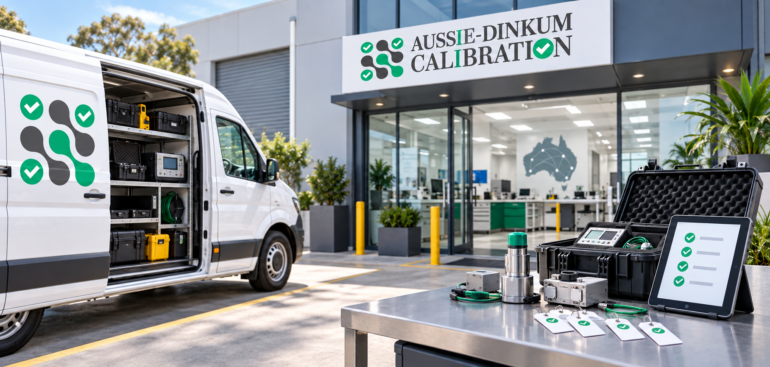
Accurate measurement equipment is essential for Australian businesses operating in industries such as manufacturing, engineering, healthcare, construction, laboratories, transport and electrical services. When instruments produce inaccurate measurements, they can affect product quality, workplace safety, technical decisions and operational efficiency.
Choosing a reliable calibration service provider is therefore an important business decision. A suitable provider should have the technical knowledge, equipment, procedures and documentation required to calibrate your instruments accurately.
The right provider can help your business maintain reliable equipment, organise calibration records, reduce measurement risks and meet relevant quality requirements.
Why Is Choosing the Right Calibration Provider Important?
Calibration compares an instrument’s measurements against an appropriate reference standard. This process helps identify whether the instrument is measuring accurately and whether adjustment, repair or further investigation may be required.
An unreliable or unsuitable calibration service may produce incomplete results, unclear documentation or calibration that does not meet your organisation’s requirements.
A professional calibration provider can help your business:
- Maintain Measurement Accuracy: Regular calibration helps confirm that instruments continue to perform within the required specifications.
- Improve Equipment Reliability: Calibration results can reveal measurement drift, instability and other performance issues.
- Support Quality Management: Calibration certificates and equipment records can support internal quality-control procedures and external audits.
- Reduce Operational Risks: Accurate instruments reduce the likelihood of incorrect decisions based on unreliable measurements.
- Improve Equipment Management: A planned calibration schedule helps businesses monitor instruments and avoid missed calibration dates.
Understand Your Calibration Requirements First
Before choosing a calibration service provider, identify the instruments your business uses and the level of calibration required.
Different equipment types require different reference standards, environmental conditions, procedures and technical expertise.
Prepare an equipment list containing details such as:
- Instrument type
- Manufacturer and model
- Serial or asset number
- Measurement range
- Required accuracy
- Current calibration due date
- Equipment location
- Applicable standards or procedures
- Required certificate or reporting format
Providing this information allows a calibration provider to determine whether it can meet your technical and operational requirements.
Check the Provider’s Technical Experience
A calibration provider should have experience working with the types of instruments used by your organisation.
Some providers specialise in particular measurement areas, while others offer services across several categories.
Common calibration capabilities may include:
- Electrical instruments
- Pressure and vacuum equipment
- Temperature and humidity instruments
- Gas detection equipment
- Flow measurement devices
- Sound and acoustic instruments
- Biomedical equipment
- Test and tag equipment
- Dimensional instruments
- Process-control instruments
Ask the provider whether it regularly calibrates your specific equipment type, model and measurement range.
Experience is especially important when instruments are highly specialised, used in critical processes or subject to strict quality requirements.
Confirm Measurement Traceability
Measurement traceability is one of the most important factors to consider when selecting a calibration provider.
Traceability means that calibration results can be related to recognised measurement standards through a documented and unbroken chain of comparisons. Each stage should contribute to the overall measurement uncertainty.
A reliable provider should be able to explain:
- Which reference standards are used
- How those standards are calibrated
- How traceability is maintained
- How calibration results are recorded
- Whether measurement uncertainty is reported
- Which procedures apply to your equipment
Do not rely only on general statements such as “fully traceable.” Ask whether the traceability and documentation provided are suitable for your organisation’s quality, regulatory or contractual requirements.
Check Whether NATA-Accredited Calibration Is Required
Some Australian businesses require calibration performed under accreditation from the National Association of Testing Authorities, Australia (NATA). This may depend on industry requirements, customer contracts, quality-management systems or regulatory obligations.
However, accreditation does not automatically cover every service a laboratory offers.
If NATA-accredited calibration is required, confirm that:
- The provider currently holds the relevant accreditation
- The specific instrument type is included within its accredited scope
- The required measurement range is covered
- The requested calibration method is included
- The certificate will be issued under the relevant accredited scope
Ask the provider to identify the applicable scope before sending your equipment. This helps prevent misunderstandings and ensures the service matches your requirements.
Review the Calibration Certificate
The calibration certificate is an important record of the work completed. It should provide enough information to identify the instrument, understand the results and maintain an organised calibration history.
Depending on the service, a certificate may include:
- Customer details
- Instrument description
- Manufacturer and model
- Serial or asset number
- Date of calibration
- Calibration procedure
- Measurement results
- Reference standards used
- Traceability information
- Measurement uncertainty, where applicable
- Environmental conditions, where relevant
- Statement of adjustment or repair
- Recommended or customer-specified due date
- Name or authorisation of the responsible personnel
Before selecting a provider, request a sample certificate and check whether it contains the information required by your quality system.
Evaluate the Provider’s Calibration Capabilities
A provider must have suitable reference equipment and procedures for the measurement range and accuracy required by your instruments.
For example, a provider may calibrate pressure gauges but may not cover the pressure range used by your equipment. Similarly, it may calibrate basic electrical instruments but not specialised high-voltage or high-frequency devices.
Ask the following questions:
- Can you calibrate this exact instrument?
- Is the full measurement range covered?
- What accuracy or uncertainty can you provide?
- Is adjustment available if the instrument fails?
- Can you provide before-and-after adjustment results?
- Are repairs available?
- Will the calibration meet our required procedure or specification?
These questions help confirm whether the provider’s capabilities match your equipment.
Compare On-Site and Laboratory Calibration Services
Calibration providers may offer laboratory calibration, on-site calibration or both.
Laboratory Calibration
Laboratory calibration is completed in a controlled environment using suitable reference equipment.
It may be appropriate when:
- Equipment can be transported safely
- Controlled environmental conditions are important
- Specialised laboratory systems are required
- Detailed measurements need to be completed
- The instrument requires repair or adjustment
On-Site Calibration
On-site calibration is performed at the customer’s premises.
It may be suitable when:
- Equipment is large or difficult to transport
- Instruments are installed within machinery
- Removing equipment would interrupt operations
- Multiple instruments are located at one facility
- The business wants to reduce equipment downtime
Ask whether the same calibration capability, documentation and traceability are available for on-site work. Some services may only be available in a controlled laboratory environment.
Consider Turnaround Time and Business Downtime
Calibration turnaround time can affect production, testing, maintenance and customer delivery schedules.
Before booking the service, confirm:
- Expected turnaround time
- Equipment collection and return options
- Availability of on-site calibration
- Priority or urgent service options
- Estimated downtime
- Whether delays will be communicated
- How damaged or non-compliant equipment will be handled
The cheapest calibration service may not be the most economical option if your equipment remains unavailable for an extended period.
Choose a provider that offers realistic timelines and communicates clearly throughout the process.
Look for Calibration Reminder and Asset-Management Support
Businesses with multiple instruments may find it difficult to monitor calibration due dates manually.
A reliable calibration provider may offer:
- Calibration-due reminders
- Equipment registers
- Certificate storage
- Service-history records
- Asset identification
- Calibration labels
- Scheduled collection or on-site visits
- Assistance with calibration planning
These services can reduce the risk of equipment remaining in use after its calibration due date.
However, your organisation should still maintain its own equipment records and remain responsible for determining suitable calibration intervals.
Assess Communication and Customer Support
Good communication is an important sign of a dependable calibration provider.
The provider should be willing to explain:
- What the calibration includes
- Which standards and procedures are used
- Whether the equipment is within tolerance
- What happens if an instrument fails
- Whether adjustment or repair is available
- What documentation will be supplied
- When the equipment will be returned
Technical information should be communicated clearly. Your business should understand the results and any action required after calibration.
Do Not Choose a Provider Based Only on Price
Price is an important consideration, but it should not be the only factor used to select a calibration company.
A low-cost service may not include the required measurement points, uncertainty information, adjustment, traceability or certificate details.
When comparing quotations, check whether each provider includes the same services.
Consider:
- Calibration scope
- Number of measurement points
- Traceability
- Certificate type
- Adjustment and repair options
- On-site or laboratory service
- Equipment collection and delivery
- Turnaround time
- Urgent service charges
- Calibration labels and reminders
Comparing the complete service provides a more accurate understanding of value than comparing the quoted price alone.
Questions to Ask a Calibration Service Provider
Before selecting a calibration provider in Australia, ask the following questions:
- Do you calibrate our specific instrument types and models?
- What measurement ranges and levels of accuracy can you support?
- How do you maintain measurement traceability?
- Is the requested service covered by an appropriate accredited scope if accreditation is required?
- What information will appear on the calibration certificate?
- Do you provide both on-site and laboratory calibration?
- What is the expected turnaround time?
- Can you adjust or repair instruments that fail calibration?
- Will you provide results before and after adjustment?
- Do you offer calibration reminders or equipment-management support?
- How will you notify us if an instrument is outside tolerance?
- Can you help us develop a suitable calibration schedule?
Clear answers to these questions can help your business make an informed decision.
Warning Signs to Look Out For
Businesses should be cautious when a calibration provider:
- Cannot clearly explain its traceability
- Refuses to provide a sample certificate
- Makes unclear claims about accreditation
- Cannot confirm whether your measurement range is covered
- Provides a quotation without reviewing equipment details
- Does not explain how failed instruments are handled
- Offers unrealistic turnaround times
- Provides incomplete equipment identification
- Does not maintain clear service records
- Focuses only on price without discussing technical requirements
Calibration should provide confidence in your measurement equipment. Unclear procedures or documentation can create unnecessary risks.
How Often Should You Review Your Calibration Provider?
Businesses should periodically review the performance of their calibration provider.
Consider whether the provider consistently delivers:
- Accurate and complete certificates
- Reliable turnaround times
- Clear communication
- Suitable technical support
- Appropriate measurement capabilities
- Consistent traceability
- Effective handling of failed instruments
- Good equipment care
- Responsive customer service
Supplier reviews can form part of your organisation’s quality-management and procurement procedures.
If your equipment, standards or business operations change, confirm that the provider can continue meeting your requirements.
Final Thoughts
Choosing a reliable calibration service provider in Australia requires more than comparing prices. Businesses should evaluate technical expertise, measurement capabilities, traceability, certificates, turnaround times, service options and customer support.
The provider should understand your instruments and provide calibration that matches your operational, quality and compliance requirements.
Before booking a service, prepare an accurate equipment list, confirm the required calibration type and ask for clear information about the process and documentation.
A dependable provider can help your business maintain accurate measurements, reliable equipment, organised records and greater confidence in its operations.