
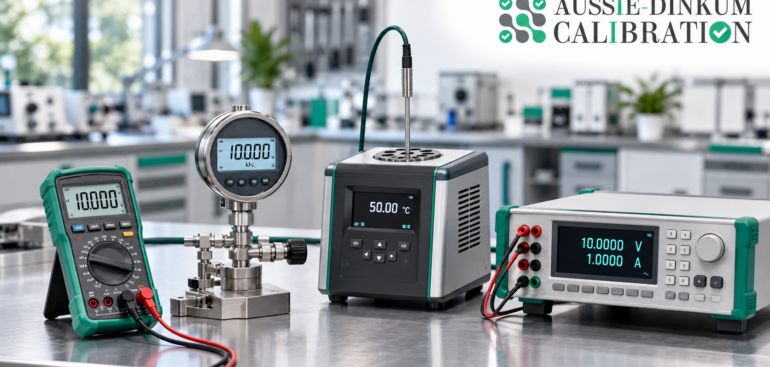
A calibration company in Australia needs clear equipment details and service requirements to prepare a useful quotation.
Providing only an instrument name may leave important questions unanswered. The required functions, measurement ranges, reporting needs and service location can all affect the proposed work and price.
A detailed enquiry helps businesses compare quotations, plan equipment downtime and reduce changes after the equipment reaches the laboratory.
Why Does a Detailed Calibration Quote Request Matter?
Two quotations for the same instrument may cover different services.
One may include selected measurement points, while another covers additional functions or accessories. Transport, adjustment and reporting requirements may also differ.
A Clear Request Helps Confirm:
- Which instruments require calibration.
• What functions and ranges need assessment.
• Whether accessories form part of the measurement system.
• What certificate and reporting requirements apply.
• Whether onsite or laboratory service is preferred.
• When the equipment must be returned.
• Which charges are included or excluded.
The aim is to establish an agreed scope before comparing prices or approving the work.
1. Provide Complete Equipment Identification
Start with an accurate description of each instrument.
Manufacturer and model details help the laboratory identify the equipment’s capabilities and assess whether it can perform the requested calibration.
Equipment Details to Include:
- Instrument type.
• Manufacturer.
• Full model number.
• Serial number, where available.
• Internal asset number.
• Quantity requiring service.
• Detachable probe or sensor details.
• Relevant accessories.
Attach clear photographs of the equipment and identification plate if the model number is difficult to read.
For multiple instruments, provide an equipment list with one row per item. Separate instruments that have different functions, accessories or service requirements.
2. Explain How the Equipment Is Used
Describe the measurement task the equipment supports.
An instrument’s full operating range may be much broader than the range used in your workplace. Explaining its application helps the laboratory discuss an appropriate calibration scope.
Useful Application Information Includes:
- What the instrument measures.
• Typical operating values.
• Functions used regularly.
• Relevant product or process limits.
• Whether measurements support acceptance decisions.
• Environmental conditions during normal use.
• Customer or quality-system requirements.
For example, a multimeter used mainly for DC voltage measurements may have different requirements from one used for resistance, AC voltage and current.
Do not assume that a quotation automatically covers every available function.
3. Specify Measurement Ranges and Test Points
Identify the ranges and calibration points you need, where these are known.
If you do not have a defined test-point schedule, provide your normal working range and ask the laboratory to propose suitable coverage.
Information to Include:
- Measurement parameter.
• Units of measurement.
• Required operating range.
• Requested test points.
• Functions or channels requiring calibration.
• Relevant manufacturer specifications.
• Any required calibration method.
NATA’s guidance for customers recommends specifying the calibration’s purpose, parameters, ranges and applicable standards or specifications when arranging work. Calibration Labs
Hypothetical Example:
- Equipment: Digital temperature indicator with a detachable probe.
• Normal use: Measurements between 20°C and 80°C.
• Requested points: 20°C, 50°C and 80°C, subject to laboratory review.
• Scope: Indicator and identified probe assessed together.
These example points are illustrative. Suitable coverage depends on the equipment and intended use.
4. State Acceptance and Reporting Requirements
Tell the laboratory whether you require measurement results only or an assessment against specified limits.
If a pass or fail statement is needed, identify the acceptance specification and ask the laboratory to explain the applicable decision rule.
Clarify the Following:
- Manufacturer specifications or customer-defined tolerances.
• Relevant standard or procedure, including its version.
• Whether a statement of conformity is required.
• How measurement uncertainty will be considered.
• Required certificate details.
• Any customer-specific reporting format.
A calibration result and a pass or fail assessment are different outputs. Agree on the required reporting before work begins.
Avoid requesting a “pass certificate” without explaining the requirements against which the equipment should be assessed.
5. Confirm Accreditation Requirements
State whether your organisation requires a NATA-endorsed calibration report.
Check that the proposed work falls within the laboratory’s relevant accredited scope. Accreditation for one activity does not establish coverage for every instrument, range or service location.
<h3>Questions to Ask:</h3>
- Is the requested calibration covered by the accredited scope?
• Are the required parameters and ranges included?
• Is the available measurement uncertainty suitable for the application?
• Does the scope cover the proposed service location?
• Will the requested results be NATA-endorsed?
• Will any work be performed by an external provider?
NATA recommends checking the laboratory’s scope and explicitly stating when NATA-endorsed results are required. Calibration Labs
Do not assume that every service advertised by an accredited laboratory carries the same endorsement.
6. Identify Probes, Leads and Accessories
Explain which components will accompany each instrument.
Some requests concern an indicator alone. Others concern a complete system, including the sensor and connecting components.
Accessories to Identify May Include:
- Temperature probes.
• Pressure adapters and fittings.
• Electrical leads and connection accessories.
• External sensors.
• Power supplies and chargers.
• Interface cables.
• Software or access instructions needed for operation.
Ask the laboratory which accessories are necessary before dispatch.
If several probes are used with one indicator, list each probe and explain which combinations require assessment.
7. Choose Laboratory or Onsite Service
State your preferred service arrangement and location.
Equipment portability, access, operating conditions and service capability can influence whether laboratory or onsite calibration is appropriate.
For Laboratory Service, Provide:
- Dispatch location.
• Expected delivery date.
• Return address.
• Packaging or handling requirements.
• Preferred freight arrangements.
For Onsite Service, Provide:
- Site address and postcode.
• Number and location of instruments.
• Site contact details.
• Available working hours.
• Induction and access requirements.
• Equipment shutdown arrangements.
• Relevant environmental or safety conditions.
Ask whether travel, accommodation, minimum attendance charges or additional visits are included.
8. Explain Equipment Condition and Known Faults
Disclose problems before requesting the quotation.
An instrument with a damaged connector or intermittent fault may need assessment or repair before calibration can be completed.
Condition Information to Include:
- Known faults or error messages.
• Physical damage.
• Unstable readings.
• Missing accessories.
• Previous overload or impact.
• Recent repairs or adjustments.
• Relevant contamination or cleaning requirements.
State whether you want calibration only, a fault assessment, or a separate repair quotation.
Ask how charges will be handled if the equipment cannot be calibrated in its received condition.
A Practical Calibration Quote Request Checklist
| Request item | What to provide or confirm |
| Equipment identity | Type, manufacturer, model and quantity |
| Asset details | Serial numbers and internal asset references |
| Application | Intended use and normal operating values |
| Calibration scope | Functions, ranges, channels and test points |
| Accessories | Probes, leads, sensors and required combinations |
| Acceptance requirements | Applicable specifications or tolerances |
| Reporting | Certificate details and conformity statement requirements |
| Accreditation | Required endorsement and relevant scope coverage |
| Equipment condition | Faults, damage and service history |
| Service location | Laboratory delivery or onsite address |
| Timing | Required completion and return dates |
| Additional work | Approval conditions for repair or adjustment |
| Logistics | Packaging, freight and return arrangements |
| Commercial details | Itemised charges, GST, exclusions and quote validity |
What Timing and Turnaround Information Should You Provide?
Give a specific required return date wherever possible.
“Urgent” can mean different things to different organisations. A clear deadline helps the laboratory assess availability and explain any priority-service options.
Recommended Details:
- Planned Dispatch Date: State when the equipment will leave your premises.
- Required Return Date: Identify when it must be available for use.
- Shutdown Window: Explain any limited period available for servicing.
- Batch Requirements: State whether equipment can be serviced in stages.
- Priority Items: Identify instruments needed first.
- Freight Allowance: Include transport time in your planning.
- Repair Contingency: Ask how additional work could affect completion.
- Certificate Delivery: Confirm when reports will become available.
Ask whether the stated turnaround begins when the equipment arrives, when the order is approved or when all required information is received.
Clarify Adjustment, Repair and Additional Charges
Agree on what the laboratory may do if the instrument needs intervention.
Calibration, adjustment and repair are different activities. A quotation should make their treatment clear.
Questions to Include:
- Is adjustment included where available?
• Must approval be obtained before adjustment?
• Can as-found results be recorded before intervention?
• Will as-left results be supplied after adjustment?
• Are repairs quoted separately?
• Is recalibration after repair included?
• What assessment fee applies if repair is declined?
• What happens if the equipment is beyond economical repair?
Where the original condition matters to your quality records, request as-found results explicitly and agree on the process before work starts.
Common Mistakes to Avoid
Requesting a Price Using Only the Instrument Name
Include the model, quantity and required scope so the laboratory can assess the request.
Assuming Every Function Is Included
Check the quoted functions, ranges and test points against your actual requirements.
Comparing Different Service Scopes by Price Alone
Review reporting, accessories, freight and additional-work conditions alongside the quoted amount.
Leaving Accreditation Requirements Until Dispatch
Confirm required endorsement and scope coverage during the enquiry stage.
Sending Equipment Without Required Accessories
Ask what is needed to assess the intended instrument or measurement system.
Approving Work Without Reviewing Exclusions
Check for separate charges covering repair, adjustment, priority service, travel and transport.
Requesting a Quote From Aussie Dinkum Calibration
When contacting Aussie Dinkum Calibration, prepare an equipment list and explain your intended measurement use.
Include the service location, required completion date and any specific certificate or accreditation requirements. Ask the team to confirm capability and the proposed scope for each item.
Your Enquiry Should Include:
- Business name and contact person.
• Equipment manufacturer, model and quantity.
• Serial or asset numbers, where available.
• Required functions, ranges and test points.
• Probe and accessory details.
• Known equipment faults.
• Acceptance and reporting requirements.
• Preferred service arrangement.
• Required return date.
• Request for an itemised quotation.
Attach previous certificates, photographs or relevant specifications where they help explain the request. Identify any changes needed rather than assuming that the previous service scope remains suitable.
Final Thoughts
A calibration company in Australia can prepare a clearer quotation when your enquiry defines the equipment, intended use and required service.
Provide complete identification, explain the measurement scope and confirm reporting, accreditation, timing and approval requirements before booking.
A well-prepared request makes quotations easier to compare and helps the agreed service match your business needs.