
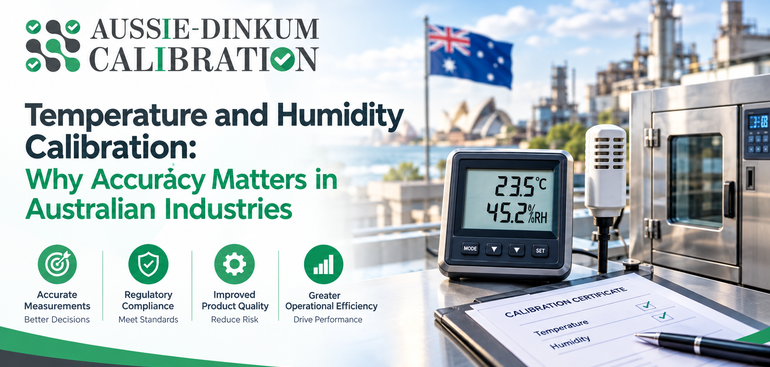
Temperature and humidity affect how products are manufactured, stored, tested and transported. Australian businesses use thermometers, temperature probes, data loggers and humidity sensors to monitor these conditions and make decisions based on their readings.
Over time, an instrument’s readings can drift. If the error goes unnoticed, a business may believe its conditions are within the required range when they are not. Regular temperature and humidity calibration helps identify measurement errors and supports more reliable monitoring.
Why Is Temperature and Humidity Calibration Important?
Calibration compares an instrument’s readings with a suitable reference under defined conditions. The results show whether the instrument meets the accuracy requirements for its intended use. Depending on the results, the business may continue using it, arrange an adjustment or repair, or replace it.
Key Benefits:
- Reliable Measurements: Accurate readings help staff respond to actual changes in temperature and humidity.
- Product Quality: Reliable monitoring helps protect materials and products that may be affected by unsuitable conditions.
- Better Decisions: Calibration helps businesses determine whether a reading can be trusted before taking action.
- Useful Records: Certificates and equipment histories support quality reviews, investigations and audits.
Australian Industries That Depend on Accurate Measurements
Temperature and humidity requirements differ by industry, product and process. Common applications include:
- Food Production and Storage: Monitoring conditions during processing, cold storage and distribution.
- Pharmaceuticals and Healthcare: Checking storage environments for medicines, samples and other sensitive materials.
- Manufacturing: Controlling environmental conditions that may affect materials, production or finished products.
- Laboratories: Maintaining suitable conditions for testing, equipment and samples.
- Agriculture: Monitoring storage and processing conditions for produce and other goods.
- Warehousing and Logistics: Recording conditions while sensitive products are stored or transported.
Instruments That May Require Calibration
Businesses may need to calibrate several types of temperature and humidity equipment:
- Digital Thermometers: Used for routine temperature checks.
- Temperature Probes: Used in production, storage and testing applications.
- Temperature and Humidity Data Loggers: Used to record conditions over time.
- Humidity Sensors: Used to monitor relative humidity in rooms, equipment or processes.
- Environmental Monitoring Systems: Used to track conditions across facilities or storage areas.
- Cold Storage Monitoring Equipment: Used to check refrigerators, freezers and other controlled spaces.
What Can Happen When an Instrument Is Inaccurate?
An inaccurate sensor can make unsuitable conditions appear acceptable or trigger an unnecessary response when conditions are actually within range. Either outcome can affect operations.
For example, an unreliable temperature logger may leave a gap in a cold storage record. An inaccurate humidity sensor may cause staff to adjust a controlled environment unnecessarily. Calibration helps businesses find these problems before they continue relying on incorrect readings.
Choosing a Temperature and Humidity Calibration Provider
The right service depends on the instruments being used and the accuracy the business needs. When choosing a provider, consider:
- Instrument Capability: Can the provider calibrate your specific sensors, probes and loggers?
- Required Range: Can it test at points that reflect the conditions in which you use the equipment?
- Documentation: Will the certificate clearly identify the instrument, test results and calibration date?
- Measurement Traceability: Can the provider explain how its reference measurements are traced?
- Service Options: Is laboratory or on-site calibration more suitable for your equipment and operations?
Where a business requires accredited calibration, it should confirm that the provider’s accreditation scope covers the relevant instrument, measurement range and service.
How Often Should Temperature and Humidity Equipment Be Calibrated?
There is no single interval that suits every instrument. A business should set its calibration schedule according to the equipment manufacturer’s guidance, how often the instrument is used, the conditions it operates in, its previous calibration results and the consequences of an inaccurate reading.
An instrument may also need checking sooner if it has been damaged, repaired, exposed to unusual conditions or started producing unexpected readings.
Final Thoughts
Temperature and humidity calibration helps Australian businesses trust the measurements they use every day. It can reveal instrument drift, support product quality and provide clear records for equipment management.
By choosing suitable calibration points, keeping records and reviewing instruments at appropriate intervals, businesses can make better decisions about the conditions that matter to their operations.