
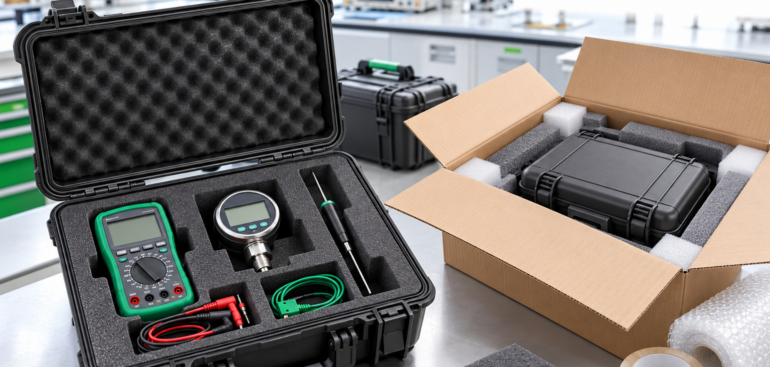
Calibration services in Australia help businesses assess the measurement performance of instruments used in manufacturing, maintenance, testing and quality control. Before calibration begins, however, equipment must reach the laboratory in a suitable condition.
Poor packaging can expose instruments to impact, vibration, moisture and unnecessary movement. Missing accessories or incomplete paperwork can also delay work while the laboratory requests additional information.
A documented packing and transport process helps protect equipment, supports clear handovers and makes it easier to organise its return.
Why Does Packing Matter When Sending Instruments for Calibration?
Measurement instruments can contain sensitive components, exposed connectors, fragile displays and delicate probes. Their transport needs vary according to their construction and the manufacturer’s instructions.
A handheld multimeter, a precision balance and a temperature probe should not automatically be packed in the same way. Packaging must suit the individual instrument and the planned transport method.
Common Transport Problems Include:
- Instruments moving freely inside oversized cartons.
• Heavy accessories pressing against displays or controls.
• Probes bending during handling.
• Connectors left exposed to impact or contamination.
• Equipment arriving with missing leads or power supplies.
• Shipping labels becoming detached or unreadable.
• Instruments delivered without booking details.
• Returned equipment being used without an inspection.
Preparing each shipment carefully helps reduce these avoidable problems.
1. Confirm the Laboratory’s Requirements Before Packing
Contact the calibration laboratory before dispatching equipment. Confirm the booking, delivery address, requested service and any preparation instructions.
Some instruments require particular accessories or operating information. Others may need specialised handling arrangements that should be agreed before a courier is booked.
Questions to Confirm:
- Has the laboratory accepted the booking?
• What booking reference should accompany the shipment?
• Which instruments and accessories should be included?
• Are there specific packaging or preparation instructions?
• What functions, ranges and test points require calibration?
• Should reported faults be documented separately?
• Who should receive the delivery?
• How will return transport be arranged?
Record the answers against the equipment booking so that packing staff have clear instructions.
2. Identify and Inspect Every Instrument
Check each instrument’s identity before placing it in a case or carton. Use the manufacturer’s serial number and your internal asset number to distinguish similar instruments.
Inspect the equipment and record its condition. Existing damage, loose components or unusual behaviour should be reported to the laboratory rather than left unexplained.
Pre-Packing Inspection Checklist:
- Confirm the equipment description, model and serial number.
• Check that the internal asset label is readable.
• Inspect the housing, display and controls.
• Check accessible connectors and supplied accessories.
• Record existing cracks, dents or other damage.
• Document reported faults or intermittent problems.
• Photograph the instrument and its accessories where useful.
• Update its status in the equipment register.
Photographs provide a useful condition record, particularly for valuable instruments or shipments containing several items.
3. Prepare Equipment According to Manufacturer Instructions
Follow the manufacturer’s preparation and transport instructions. Do not assume that every instrument should be dismantled, drained or have its batteries removed.
Where transport locks, protective covers or dedicated shipping fixtures are specified, use them as instructed.
Equipment exposed to process materials or contamination may require an agreed cleaning or decontamination procedure before the laboratory can accept it.
Preparation Actions May Include:
- Switching off the instrument.
• Following the specified shutdown procedure.
• Fitting approved connector caps or protective covers.
• Securing moving components using designated transport restraints.
• Protecting exposed probes and sensors.
• Documenting any contamination or previous exposure.
• Following agreed cleaning instructions.
• Confirming battery handling requirements with the carrier.
If preparation involves unfamiliar equipment or hazardous residues, obtain instructions from the responsible technical staff and receiving laboratory before proceeding.
4. Choose Packaging Suited to the Instrument
Use packaging that supports and protects the instrument throughout the journey.
A manufacturer-supplied shipping case or retained original packaging may be suitable if it remains in good condition and is intended for transport. A lightweight carrying case designed for local use may need additional outer protection.
Packaging Options to Consider:
- A rigid protective case with suitable internal supports.
• Original shipping inserts in serviceable condition.
• An appropriately rated outer carton.
• Cushioning compatible with the instrument.
• Separate compartments for accessories.
• Protective sleeves for delicate probes.
• Specialist packaging for heavy or unusually shaped equipment.
Avoid relying on a “fragile” label to compensate for inadequate packaging. The package itself must provide suitable protection.
Is a Hard Carrying Case Enough?
A hard case can protect equipment, but its suitability depends on its construction, condition and internal fit.
Check that the instrument cannot strike the case walls or other contents. Confirm whether the laboratory or carrier recommends an outer carton, particularly when the case has exposed catches, handles or hinges.
5. Prevent Movement and Protect Delicate Parts
Position the instrument so that cushioning supports its body without placing pressure on fragile components.
Displays, terminals, adjustment controls and probe tips should not carry the weight of other items. Use properly fitted supports to keep equipment stable.
Internal Packing Checklist:
- Prevent instruments from contacting each other.
• Keep heavy items away from fragile components.
• Support probes without bending them.
• Protect exposed connectors.
• Separate accessories from the main instrument.
• Fill unsupported spaces with suitable cushioning.
• Check that the lid closes without forcing the contents.
• Avoid packaging materials that could contaminate sensitive surfaces.
For instruments with specific orientation requirements, follow the manufacturer’s instructions and agree on suitable transport arrangements.
6. Pack and List Accessories Separately
Accessories can be essential to calibration, especially when they form part of the measurement system.
Confirm which leads, probes, adaptors, sensors and power supplies the laboratory needs. Include only the agreed items and record them on a packing list.
Accessory Details to Record:
- Accessory description.
• Quantity supplied.
• Identification or serial number where applicable.
• Instrument to which it belongs.
• Whether it requires calibration.
• Whether it is supplied only for operation.
• Its location within the package.
Coil cables without tight bends and protect connectors from strain. Keep loose metal accessories from contacting displays or instrument housings.
Where detachable probes have their own identification numbers, include those numbers in the booking and dispatch records.
7. Include Clear Paperwork and Shipping Information
The laboratory should be able to identify the sender, equipment and requested work when the package is opened.
Include a packing list and booking reference inside the shipment. Keep a digital copy with your own records.
Useful Information to Include:
- Business name and contact person.
• Telephone number and email address.
• Calibration booking reference.
• Purchase order number where applicable.
• Equipment descriptions and serial numbers.
• Internal asset numbers.
• Accessory list.
• Requested calibration scope.
• Reported faults or special instructions.
• Return delivery address.
Remove or cover outdated shipping labels so that they do not conflict with the current destination details.
8. Arrange Suitable Transport and Track the Shipment
Choose transport arrangements appropriate to the equipment’s size, value, fragility and handling requirements.
Discuss any special conditions with the carrier before booking. Where batteries, liquids or other restricted contents are involved, confirm the carrier’s current acceptance and preparation requirements.
Transport Planning Checklist:
- Confirm the receiving address and delivery hours.
• Select a service suitable for the packed equipment.
• Record the courier and consignment number.
• Keep dispatch photographs where useful.
• Record the collection date and number of packages.
• Review available cover and relevant exclusions.
• Share tracking details with the laboratory.
• Request confirmation that the contents have been received.
Courier delivery confirmation establishes that a shipment reached its destination. Laboratory acknowledgement should separately confirm that the expected instruments and accessories arrived.
A Practical Instrument Packing and Transport Checklist
| Packing or transport item | What to confirm |
| Booking | The laboratory has accepted the equipment and service request |
| Equipment identity | Model, serial number and asset number are recorded |
| Condition | Existing damage and reported faults are documented |
| Preparation | Manufacturer and laboratory instructions are followed |
| Packaging | Case, carton and cushioning suit the instrument |
| Internal support | Equipment cannot move into other items or case walls |
| Fragile components | Displays, connectors and probes are protected |
| Accessories | Required items are packed securely and listed |
| Paperwork | Booking details, scope and contact information are included |
| Shipping labels | Destination information is clear and current |
| Tracking | Dispatch and delivery details are retained |
| Laboratory receipt | Instruments and accessories are acknowledged |
| Return inspection | Condition, contents and documentation are checked |
What Should Happen When Instruments Return From Calibration?
Inspect returned equipment before placing it back into normal use.
Check the package for visible damage, then compare the contents with the dispatch list. Review the calibration certificate and any laboratory notes about faults, repairs or adjustments.
Recommended Actions:
- Check the Delivery: Inspect the outer packaging and record visible damage.
- Confirm Equipment Identity: Match serial numbers and asset numbers to the booking.
- Verify Accessories: Compare returned items with the original packing list.
- Inspect the Instrument: Look for damage to the housing, connectors, display and controls.
- Follow Stabilisation Instructions: Allow the instrument to reach suitable operating conditions where required.
- Review Documentation: Assess calibration results, limitations and service notes against intended use.
- Authorise Release: Record the decision before returning the equipment to service.
- Update Records: Save the certificate and update equipment location and calibration information.
If transport damage is suspected, keep the instrument withdrawn from use while its condition is assessed. Retain photographs and packaging relevant to the investigation.
Common Mistakes to Avoid
Several routine shortcuts can weaken an otherwise organised calibration process.
Examples Include:
- Using damaged cartons or worn protective inserts.
• Packing instruments loosely in a large box.
• Placing heavy accessories on top of delicate equipment.
• Sending probes without suitable protection.
• Assuming a carrying case is automatically suitable for courier transport.
• Removing batteries or components without checking instructions.
• Omitting serial numbers and booking references.
• Sending contaminated equipment without prior agreement.
• Ignoring the requirements for return packaging.
• Using returned equipment before inspecting it and reviewing the results.
Arrange return packaging and transport when making the original booking. Protection is needed for both journeys.
Final Thoughts
Calibration services in Australia depend on equipment arriving ready for the agreed work. Suitable packaging, clear identification and complete accessory records help laboratories receive and process instruments efficiently.
Following manufacturer instructions, selecting appropriate transport and documenting each handover also helps businesses investigate missing items or damage. Inspection and certificate review on return complete the process before equipment is released for use.